
Not quite the prettiest city in Europe, Greece’s second largest city is loved for its charisma, cultural depth, and creative cuisine.
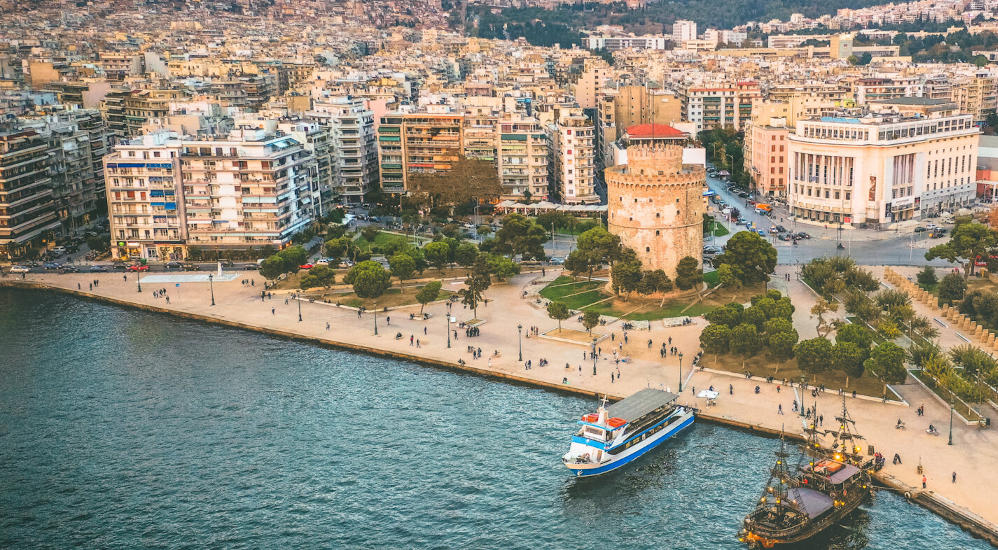
At first sight, Thessaloniki is hardly enchanting. Overlooking the inky seas of the Thermaic Gulf, grimy concrete volumes command the seafront, extending as far back as the eye would like to see.
The waterfront walk is the thing to do on most guides. But as far as beautiful waterfronts go, I wouldn’t describe Thessaloniki’s as delightful. Alongside Nikis Avenue amok with traffic on one length, graffitied benches look into dark, choppy waters on the other. As I wander, grid-wise, into the city’s grey interiors, I find myself picking up the pace. Patchwork pavements, weathered walls, a mélange of balcony awning tentage overhead, and sparse greenery, does little to encourage leisurely family strolls. Instead, we dive quickly from one bolthole of interest to another.

Clearly, I am at odds with locals who fondly refer to it as Greece’s “Bride of the North”, and have yet to appreciate the city’s more-than-skin-deep allure. Once the Byzantine Empire’s second largest city, Thessaloniki’s cultural offering is formidable. Peppered throughout drab apartment blocks are 15 UNESCO Heritage Sites from the Early Christian and Byzantine era, most built after the Great Fire of 1917 that razed through the historic center. A regional seaport for more than 2,000 years, a medley of influences (Byzantine, 482 years of Ottoman rule, Sephardic Jewish, and Balkan) have cooked up a vibrant food scene. Exciting food stops litter the backstreets of the recently christened “UNESCO Creative City of Gastronomy”. With a thriving community of artists and designers, and charisma amplified by the raw energy of 200,000 university students, our local friends (who have lived in the US) are adamant – Thessaloniki trumps New York.

For me, good food is not hard to find in Greece. Along with archaeological sites, cultural immersion opportunities, and spirit. So until I develop a deeper appreciation for Thessaloniki, it’s still a stopover en route to our annual big fat Greek gathering of friends in the paradisiacal waters of Chalkidiki.
From my still-superficial standpoint, here is one version of how to maximise your city trip with kids. Dollops of choux and cream, and an irresistible Danish knick-knack shop is partly my answer.
WHERE TO STAY
Staying centrally, and close to the waterfront is always a good idea. But where along Thessaloniki’s 5-kilometer seaside promenade are the most idyllic bits?
After the Great Fire of 1917 destroyed a third of the city, Aristotelous Square was the centerpiece of French architect Ernest Hébrard’s ambitious new plan for the city. Anchored by the 5-star Electra Palace on one end, staying within close range gives you the benefit of being close to key areas of interest you can walk to: Ladadika dining district a 6-minute walk west, shopping on Tsimski to the east, Ano Poli (the Upper, Old Town) to the north for a glimpse of the city before the fire, and the cafes of the rejuvenated port area on the waterfront.

If you prefer to be close to green open spaces, as families often do, stay close to the 15th century White Tower (also a good place to start a waterfront walk). Once a fortress, then prison, the monument and museum marks the start of the “New Waterfront”. A revitalisation project completed in 2014 transformed the waterfront with wider promenades, pocket parks, playgrounds (if somewhat uninspiring), and striking public art, including a statue of Alexander the Great and the iconic Umbrellas sculpture by George Zongolopoulos. A beloved gathering place for locals and visitors alike, the promenade comes alive with cotton candy vendors and snack carts, while buskers fill the air with music, dance, marionette performances, and more.
DOWNTOWN DINING, SWEETS & TREATS WITH KIDS
Epicurean center Thessaloniki may be, but the conventional wisdom of restaurant guides is mostly out of touch with our dining scene with children. Avoiding tavernas spilling into pavements next to busy streets, and purveyors of deconstructed flavour bombs, where are the child-friendly hangouts we frequent instead?
— LADADIKA DINING DISTRICT —
Ladadika’s recent revival morphed it from a red light district into a bustling dining hotspot. Pedestrian-only after 6:30pm, you can sit outside without worrying about children jumping onto the street. You know it’s a tourist hotspot when beckoning waitresses smile passersby with eager warmth. But there’s such a variety of tavernas, you don’t have to walk far to find something of interest. Some will even entertain with live music – always a welcome distraction with kids with trouble keeping still at tables.

— THE GREEK —
Close to the White Tower is The Greek – our recommended starting (or ending) point for an itinerary including the New Waterfront walk. A down-to-earth eatery that sits in an intersection with tables spilling into a spacious sidewalk, there’s a feeling of space here that escapes most restaurants packed into narrow city streets. Serving a spread of traditional meze favourites (including seafood options), taverna child staples like bifteki (beef burgers) with fries, zucchini fries, calamari, and shrimp pasta are also on the menu.

— CHOUREAL —
Part of this Thessaloniki-born profiterole cafe’s appeal is that children can participate in assembling their sweet fantasy. Baked fresh every hour, thin-crisped choux are whisked off baking trays to receive toppings of cream, ice cream, and other sweet sprinklings.

— FLYING TIGER —
The joy of my children in Flying Tiger variety store rivals that of a visit to a sweet shop, so I thought it deserves a mention. Brimming with quirky gadgets, arts and crafts supplies, and imaginative toys, it is the sort of place where even the most restrained parent may find themselves playing fairy godmother with little resistance.
SURROUNDING SIGHTS
Our stop-overs in Thessaloniki have always been on road trips to Halkidiki for its boundless azure beaches (about an hour’s drive from the city) and impressive family-friendly beach resort draws like Sani. Fossil-rich Petralona Cave where the 700,000 year old skull of an erect homonid 35km out of the city center has recently re-opened. In the company of older kids? Noesis Science and Technology museum may be worth a stop. The archaeological site of Vergina (ancient capital of Macedon) and its Royal Tombs (including that of Alexander the Great’s father, Phillip II) are also an hour outside the city. For a truly unique experience of Greece, majestic Meteora and its monasteries in the sky is a 3-hour drive away.
